


Should You Draft Running Back Handcuffs?
- Michael DelPonte

- Aug 27, 2021
- 5 min read
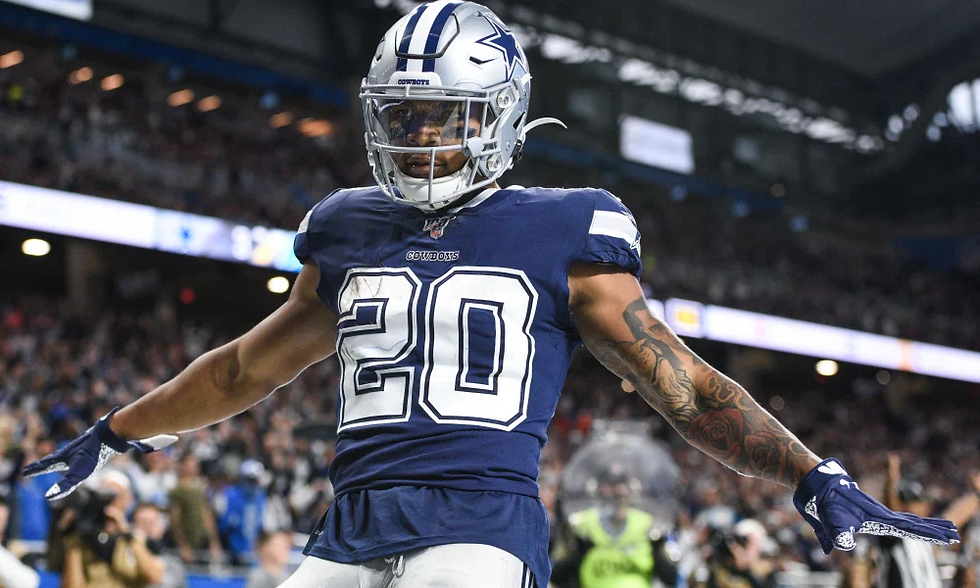
Drafting running back handcuffs in fantasy football has been around essentially since the game was invented. This strategy essentially is for you to draft the backup of your (or your opponent's) starting running backs in case of injury. It hedges your bets, and protects your investment into a specific player.
My viewpoint on handcuffs have changed in the last few years. The trend for free agency is moving away from waiver priority (the worst teams get first dibs), and the Free Agent Auction Budget system has taken over. Because this is a level playing field, it allows you to bid a dollar amount you are comfortable with to try and acquire a player on your team. Because of this, I have found it less valuable to have a handcuff taking up a roster spot on my bench. Instead, if something were to happen to my stud running back, I can go and bid on his backup if he were available on waivers.
I wanted to put this strategy to the test. I looked back at the last 7 fantasy football seasons to see whether or not it is worth rostering a handcuff on your fantasy team. Here is the data that I was able to compile:
There have been a total of 83 running backs drafted in the first two rounds of fantasy drafts since 2014.
11 in '14
11 in '15,
9 in '16,
12 in '17,
13 in '18,
12 in '19,
15 in '20.
There is a slow trend of increased running backs taken in the first two rounds of drafts. That trend is definitely continuing in 2021.
Of the 83 running backs selected, 52 handcuffs were drafted within the first 13 rounds of drafts (not including pass-catching backs with standalone value like Darren Sproles).
64% of the time, a stud back was handcuffed with a backup on a roster.
Naturally, if one running back is worthy of a high pick on a specific team, the backup must also if something were to happen to that back, right?
Of the 83 running backs drafted in the first two rounds, 44 of them (53%) played at least 14 games. Because of that, the backups played in more limited fashion.
Of those 44 backs, 24 of them had a handcuff drafted behind them later in the draft.

If you are drafting a handcuff, the likelihood of you playing that backup in your lineup is slim, unless this player has strong standalone value. Kareem Hunt should almost always be in your starting lineup as a flex or RB2 option, even though Nick Chubb is the clear number one in Cleveland. Instances like this are rare. You will likely only play that backup if the starter is out that week or dealing with a nagging injury. With this philosophy in mind, I have ruled out those 44 draft picks, with the mindset that drafting the handcuff was not worth a roster spot. Because of this, 24 handcuffs were likely dropped and rarely used in fantasy football.
There were 39 running backs drafted since 2014 (I have included players like Nick Chubb) that drafting their handcuff would have been worth your while.
Even though 39 backs required a backup, 11 of those running backs were the sole back drafted on that roster. This means that only 28 running backs that were drafted as a handcuff since 2014 were worthy of a roster spot.
Even though there were 28 players (46%) "roster-worthy," what was their performance like?
Just because a player was drafted as a handcuff does not mean that their play was worth rostering. It could even be an instance where the fantasy community predicted the incorrect player as the handcuff. My philosophy here is that if a player was drafted as a handcuff, their performance needed to indicate at least 4 fantasy relevant games of 10+PPR points. I do have some subjectivity in my rankings here, but this is what those 28 backs were able to accomplish:
Five times, the handcuff outperformed the starter altogether that season. If you hit on this player, that is a tremendous steal in the later rounds. Examples here are DeAngelo Williams in 2015 backing up LeVeon Bell, Spencer Ware over Jamaal Charles in 2016, and Tevin Coleman in 2018 over DeVonta Freeman.
Five times, the players ended in a timeshare, and the backups' play was worthy of a roster spot and spot-start. An example of this is Ronnie Hillman as the late-round pick in 2015 when CJ Anderson was the favored early-round pick.
Six times, the handcuffs had two or more fantasy relevant performances in games where they were widely benched. This is mainly due to the fact that their starters were still healthy. The issue here is that you have the player on your bench and cannot capitalize on their performance. With this in mind, I did not count that performance towards the handcuff's results. The example I can provide is Derrick Henry in 2017. He was the backup to DeMarco Murray in Tennessee. Henry was able to have four fantasy relevant performances, but only one of those games was when Murray was out. Because of this, I rated the draft pick of Derrick Henry in 2017 as a "miss."
The other handcuffs performed intermittently, with minimal value, or not at all. Examples of this are numerous, but the names include Jaylen Samuels, Darren McFadden, Knile Davis, Ryan Mathews, Adrian Peterson (yes, him), and Justin Jackson. Just looking at those names gives me the chills, and not in a good way.
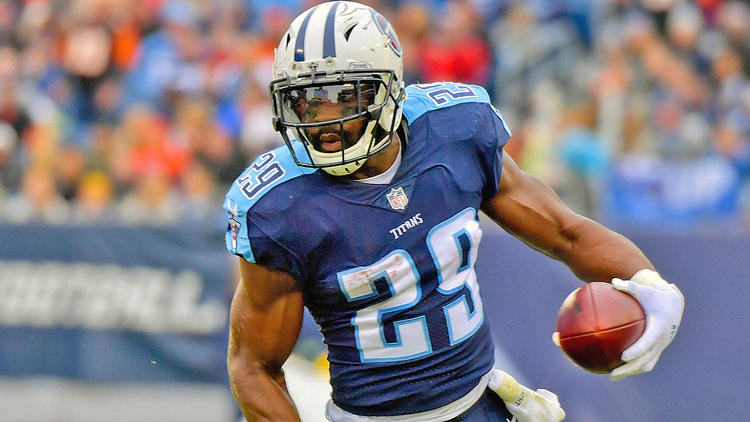
To tidy this list up a bit, 11 times out of 28 drafted handcuffs were actually worthy of their draft capital. That is a lowly 39%. However, that isn't even including the other 24 handcuffs drafted that provided little to no value because the starting back played the majority of the year. Essentially, 11 out of 52 times a handcuff was drafted was worth it. That is a woeful 21% hit rate. To add insult to injury, 20 times a handcuff SHOULD have been drafted but wasn't, in theory. Add that 20 to the back-end of the 52, and you get 11 correct selections out of 72, for an even more horrendous 15% success rate in drafting (or not drafting) handcuffs.
Summary:
In today's fantasy realm, FAAB allows for more autonomy in adding the players you want from free agency. It is almost impossible to find a handcuff, even with an ample amount of research. Where can your capital be better allocated? Go get speculative, high-upside plays! Draft players like Marquez Callaway, Trey Lance, or Blake Jarwin rather than a backup running back. In all likelihood, that handcuff you missed out on at your draft will be dropped at one point or another and then be made available to you in your waivers.


Comments